
A Day at the Beach – Bilingual English–Spanish Story, Audio & Grammar Practice (A1–C2)

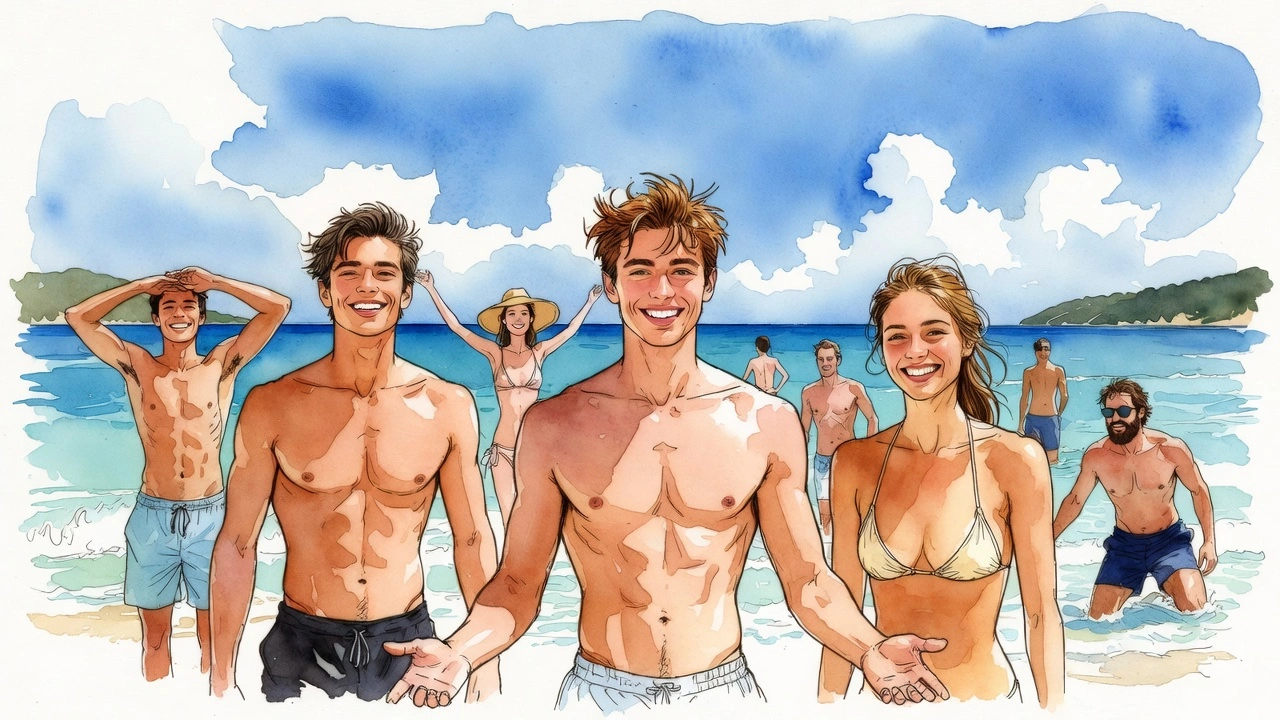
person enjoying the beach in summer
Vocabulary: beach · summer · sea · sun
Finding you a random story…
Just a second ✨
Grammar focus: los verbos del texto inglés aparecen destacados en azul. Debajo de cada nivel puedes abrir Past tense version para comparar presente y pasado, y Grammar point para entender una estructura importante del texto con una explicación sencilla.
A1 | BEGINNER
Carlos goes to the beach with his family. He swims in the sea and plays in the sand. He builds a sandcastle with his sister. Then, he sits under the umbrella and eats a sandwich. He is happy because he loves the beach.
A1 | PRINCIPIANTE
Carlos va a la playa con su familia. Nada en el mar y juega en la arena. Construye un castillo de arena con su hermana. Luego, se sienta bajo la sombrilla y come un bocadillo. Está feliz porque le encanta la playa.
🎵 He learned everything he knows at LecturaBilingue.com — the place where stories come alive. 🎵 Todo lo que sabe lo aprendió en LecturaBilingue.com, el lugar donde las historias cobran vida.
⏳ A1 | Past tense version Present → Past

La misma historia transformada al pasado. Los verbos que cambian aparecen destacados.

Carlos went to the beach with his family. He swam in the sea and played in the sand. He built a sandcastle with his sister. Then, he sat under the umbrella and ate a sandwich. He was happy because he loved the beach.
Cambios principales
goeswent swimsswam playsplayed buildsbuilt sitssat eatsate iswas lovesloved
🧠 A1 | Grammar point because + sentence

Usamos because para explicar la razón de algo. En el texto, primero sabemos que Carlos está contento y después aparece el motivo: He is happy because he loves the beach.

Regla: result + because + subject + verb.
He is happy because he loves the beach. She smiles because she is happy. We stay inside because it is raining.

Truco: después de because normalmente viene una oración completa: alguien o algo + un verbo.

🔊 AUDIO A1
🇬🇧 English
Spoken
Song
🇪🇸 Español
Spoken
Song
A1 | Practice

Match – Quizlet

Play this part of the story on Quizlet.

▶ Open the game on Quizlet
Practice the Story — A1

A Day at the Beach

Vocabulary
  • goes to the beach — va a la playa
  • with his family — con su familia
  • swims in the sea — nada en el mar
  • plays in the sand — juega en la arena
  • builds a sandcastle — construye un castillo de arena
  • with his sister — con su hermana
  • sits under the umbrella — se sienta bajo la sombrilla
  • eats a sandwich — come un bocadillo
  • is happy — está feliz
  • loves the beach — le encanta la playa
Complete the sentence
Choose the correct answer
Build the sentence

Tap the words in the correct order:

builds sandcastle Carlos a
Reading comprehension
  1. Where does Carlos go?
  2. What does he do in the sea?
  3. Who does he build the sandcastle with?
Translation practice

Translate into Spanish:

  • Carlos goes to the beach with his family.
  • He builds a sandcastle with his sister.
  • He is happy because he loves the beach.

Translate into English:

  • Carlos va a la playa con su familia.
  • Nada en el mar y juega en la arena.
  • Luego, se sienta bajo la sombrilla y come un bocadillo.

Reading and translation are bonus practice and are not included in the score.

A2 | ELEMENTARY
Carlos spends the day at the beach with his friends. They play with a ball and swim in the water. Then, they relax on the sand and have soft drinks. Carlos walks along the shore and collects shells. Before leaving, he sits to watch the sunset.
A2 | BÁSICO
Carlos pasa el día en la playa con sus amigos. Juegan con una pelota y nadan en el agua. Luego, descansan en la arena y toman refrescos. Carlos camina por la orilla y recoge conchas. Antes de irse, se sienta a ver la puesta de sol.
🎵 He learned everything he knows at LecturaBilingue.com — the place where stories come alive. 🎵 Todo lo que sabe lo aprendió en LecturaBilingue.com, el lugar donde las historias cobran vida.
⏳ A2 | Past tense version Present → Past

La misma historia transformada al pasado. Los verbos que cambian aparecen destacados.

Carlos spent the day at the beach with his friends. They played with a ball and swam in the water. Then, they relaxed on the sand and had soft drinks. Carlos walked along the shore and collected shells. Before leaving, he sat to watch the sunset.
Cambios principales
spendsspent playplayed swimswam relaxrelaxed havehad walkswalked collectscollected sitssat
🧠 A2 | Grammar point he walks / they play

El texto cambia de they a Carlos / he. Esto nos deja ver una regla básica del presente: con he, she, it añadimos normalmente -s al verbo; con I, you, we, they, no.

Regla: they play / swim, pero he walks / collects / sits.
They play with a ball. They swim in the water. Carlos walks along the shore.

Fíjate: el sujeto decide la forma del verbo. They walk, pero he walks.

🔊 AUDIO A2
🇬🇧 English
Spoken
Song
🇪🇸 Español
Spoken
Song
A2 | Practice

Match – Quizlet

Play this part of the story on Quizlet.

▶ Open the game on Quizlet
Practice the Story — A2

A Day at the Beach

Vocabulary
  • spends the day at the beach — pasa el día en la playa
  • with his friends — con sus amigos
  • play with a ball — juegan con una pelota
  • swim in the water — nadan en el agua
  • relax on the sand — descansan en la arena
  • have soft drinks — toman refrescos
  • walks along the shore — camina por la orilla
  • collects shells — recoge conchas
  • before leaving — antes de irse
  • watches the sunset — ve la puesta de sol
Complete the sentence
Choose the correct answer
Build the sentence

Tap the words in the correct order:

Carlos collects shells
Reading comprehension
  1. Who goes to the beach with Carlos?
  2. What do they do in the water?
  3. What does Carlos collect on the shore?
  4. What does he watch before leaving?
Translation practice

Translate into Spanish:

  • Carlos spends the day at the beach with his friends.
  • They relax on the sand and have soft drinks.
  • Before leaving, he sits to watch the sunset.

Translate into English:

  • Carlos pasa el día en la playa con sus amigos.
  • Juegan con una pelota y nadan en el agua.
  • Carlos camina por la orilla y recoge conchas.

Reading and translation are bonus practice and are not included in the score.

B1 | INTERMEDIATE
Carlos enjoys a sunny day at the beach. He swims in the sea and plays volleyball with his friends. Later, he sunbathes while listening to music. In the afternoon, he buys an ice cream at a nearby stand. Before heading home, he sits by the shore to enjoy the sea breeze and the sound of the waves.
B1 | INTERMEDIO
Carlos disfruta de un día soleado en la playa. Nada en el mar y juega al voleibol con sus amigos. Más tarde, toma el sol mientras escucha música. Por la tarde, compra un helado en un puesto cercano. Antes de volver a casa, se sienta en la orilla para disfrutar de la brisa marina y el sonido de las olas.
🎵 He learned everything he knows at LecturaBilingue.com — the place where stories come alive. 🎵 Todo lo que sabe lo aprendió en LecturaBilingue.com, el lugar donde las historias cobran vida.
⏳ B1 | Past tense version Present → Past

La misma historia transformada al pasado. Los verbos que cambian aparecen destacados.

Carlos enjoyed a sunny day at the beach. He swam in the sea and played volleyball with his friends. Later, he sunbathed while listening to music. In the afternoon, he bought an ice cream at a nearby stand. Before heading home, he sat by the shore to enjoy the sea breeze and the sound of the waves.
Cambios principales
enjoysenjoyed swimsswam playsplayed sunbathessunbathed buysbought sitssat
🧠 B1 | Grammar point while + verb-ing

En he sunbathes while listening to music, while nos dice que dos acciones ocurren al mismo tiempo. Como las dos acciones tienen el mismo sujeto, la segunda puede aparecer en -ing.

Regla útil: subject + verb + while + verb-ing, cuando el sujeto de las dos acciones es el mismo.
He sunbathes while listening to music. She reads while drinking coffee. They talk while walking.

Comparación: también podemos decir while he is listening to music. La versión con -ing es más compacta.

🔊 AUDIO B1
🇬🇧 English
Spoken
Song
🇪🇸 Español
Spoken
Song
B1 | Practice

Match – Quizlet

Play this part of the story on Quizlet.

▶ Open the game on Quizlet
Practice the Story — B1

A Day at the Beach

Vocabulary
  • enjoys a sunny day — disfruta de un día soleado
  • at the beach — en la playa
  • swims in the sea — nada en el mar
  • plays volleyball — juega al voleibol
  • with his friends — con sus amigos
  • later — más tarde
  • sunbathes — toma el sol
  • while listening to music — mientras escucha música
  • in the afternoon — en la tarde
  • buys an ice cream — compra un helado
  • at a nearby stand — en un puesto cercano
  • before heading home — antes de volver a casa
  • sits by the shore — se sienta en la orilla
  • the sea breeze — la brisa marina
  • the sound of the waves — el sonido de las olas
Complete the sentence
Choose the correct answer
Build the sentence

Tap the words in the correct order:

Carlos buys an ice cream
Reading comprehension
  1. What kind of day does Carlos enjoy at the beach?
  2. What sport does he play with his friends?
  3. What does he buy in the afternoon?
  4. What does he enjoy before heading home?
Translation practice

Translate into Spanish:

  • Carlos enjoys a sunny day at the beach.
  • Later, he sunbathes while listening to music.
  • Before heading home, he sits by the shore.

Translate into English:

  • Carlos disfruta de un día soleado en la playa.
  • En la tarde, compra un helado en un puesto cercano.
  • Antes de volver a casa, se sienta en la orilla para disfrutar de la brisa marina y el sonido de las olas.

Reading and translation are bonus practice and are not included in the score.

B2 | UPPER-INTERMEDIATE
Carlos takes advantage of his day off to relax at the beach. He starts by swimming in the sea and then plays frisbee with his friends. Later, he rents a paddleboard and enjoys gliding over the water. In the afternoon, he sits down to read a book while drinking a refreshing beverage. Before leaving, he walks along the shore and reflects on the sense of tranquility that being near the sea gives him.
B2 | INTERMEDIO ALTO
Carlos aprovecha su día libre para relajarse en la playa. Comienza nadando en el mar y luego juega al frisbee con sus amigos. Después, alquila una tabla de paddle surf y disfruta deslizándose sobre el agua. Más tarde, se sienta a leer un libro mientras toma una bebida refrescante. Antes de irse, camina por la orilla y reflexiona sobre la tranquilidad que le proporciona estar cerca del mar.
🎵 He learned everything he knows at LecturaBilingue.com — the place where stories come alive. 🎵 Todo lo que sabe lo aprendió en LecturaBilingue.com, el lugar donde las historias cobran vida.
⏳ B2 | Past tense version Present → Past

La misma historia transformada al pasado. Los verbos que cambian aparecen destacados.

Carlos took advantage of his day off to relax at the beach. He started by swimming in the sea and then played frisbee with his friends. Later, he rented a paddleboard and enjoyed gliding over the water. In the afternoon, he sat down to read a book while drinking a refreshing beverage. Before leaving, he walked along the shore and reflected on the sense of tranquility that being near the sea gave him.
Cambios principales
takes advantagetook advantage startsstarted playsplayed rentsrented enjoysenjoyed sits downsat down walkswalked reflectsreflected givesgave
🧠 B2 | Grammar point start by + verb-ing

El texto dice He starts by swimming in the sea. Usamos start by + -ing para indicar el primer paso de una serie de acciones o la primera manera de hacer algo.

Estructura: start by + verb-ing.
He starts by swimming in the sea. Start by reading the instructions. We started by checking the map.

No confundas: start swimming significa “empezar a nadar”; start by swimming presenta nadar como el primer paso de varias acciones.

🔊 AUDIO B2
🇬🇧 English
Spoken
Song
🇪🇸 Español
Spoken
Song
B2 | Practice

Match – Quizlet

Play this part of the story on Quizlet.

▶ Open the game on Quizlet
Practice the Story — B2

A Day at the Beach

Vocabulary
  • takes advantage of his day off — aprovecha su día libre
  • to relax at the beach — para relajarse en la playa
  • starts by swimming in the sea — comienza nadando en el mar
  • plays frisbee — juega al frisbee
  • with his friends — con sus amigos
  • rents a paddleboard — alquila una tabla de paddle surf
  • enjoys gliding over the water — disfruta deslizándose sobre el agua
  • in the afternoon — por la tarde
  • sits down to read a book — se sienta a leer un libro
  • drinking a refreshing beverage — mientras toma una bebida refrescante
  • before leaving — antes de irse
  • walks along the shore — camina por la orilla
  • reflects on — reflexiona sobre
  • the sense of tranquility — la sensación de tranquilidad
  • being near the sea gives him — estar cerca del mar le proporciona
Complete the sentence
Choose the correct answer
Build the sentence

Tap the words in the correct order:

Carlos rents a paddleboard
Reading comprehension
  1. How does Carlos begin his day at the beach?
  2. What activity does he do with his friends?
  3. What does he do in the afternoon?
  4. What does being near the sea give him?
Translation practice

Translate into Spanish:

  • Carlos takes advantage of his day off to relax at the beach.
  • Later, he rents a paddleboard and enjoys gliding over the water.
  • Before leaving, he walks along the shore and reflects on the sense of tranquility that being near the sea gives him.

Translate into English:

  • Carlos aprovecha su día libre para relajarse en la playa.
  • Después, alquila una tabla de paddle surf y disfruta deslizándose sobre el agua.
  • Antes de irse, camina por la orilla y reflexiona sobre la tranquilidad que le proporciona estar cerca del mar.

Reading and translation are bonus practice and are not included in the score.

C1 | ADVANCED
For Carlos, the beach is a sanctuary where he can disconnect from daily stress. Upon arrival, he dives into the water and enjoys the feeling of freedom. Later, he explores nearby sea caves with his snorkeling gear. In the afternoon, he joins a yoga class by the sea. As he walks along the beach at sunset, he reflects on how the ocean always restores his sense of calm and balance.
C1 | AVANZADO
Para Carlos, la playa es un refugio donde puede desconectar del estrés diario. Al llegar, se sumerge en el agua y disfruta de la sensación de libertad. Luego, explora cuevas marinas cercanas con su equipo de snorkel. Más tarde, participa en una clase de yoga frente al mar. Mientras camina por la playa al atardecer, reflexiona sobre cómo el océano siempre le devuelve una sensación de calma y equilibrio.
🎵 He learned everything he knows at LecturaBilingue.com — the place where stories come alive. 🎵 Todo lo que sabe lo aprendió en LecturaBilingue.com, el lugar donde las historias cobran vida.
⏳ C1 | Past tense version Present → Past

La misma historia transformada al pasado. Los verbos que cambian aparecen destacados.

For Carlos, the beach was a sanctuary where he could disconnect from daily stress. Upon arrival, he dived into the water and enjoyed the feeling of freedom. Later, he explored nearby sea caves with his snorkeling gear. In the afternoon, he joined a yoga class by the sea. As he walked along the beach at sunset, he reflected on how the ocean always restored his sense of calm and balance.
Cambios principales
iswas can disconnectcould disconnect divesdived enjoysenjoyed exploresexplored joinsjoined walkswalked reflectsreflected restoresrestored
🧠 C1 | Grammar point as = while / when

En As he walks along the beach at sunset, he reflects..., as introduce una acción que ocurre al mismo tiempo que otra. Aquí tiene un significado parecido a while.

Estructura: As + subject + verb, subject + verb....
As he walks, he reflects. As the sun sets, the beach becomes quieter. As I was leaving, she called me.

Matiz: as puede traducirse como “mientras” o “cuando” según el contexto. Aquí destaca que caminar y reflexionar avanzan al mismo tiempo.

🔊 AUDIO C1
🇬🇧 English
Spoken
Song
🇪🇸 Español
Spoken
Song
C1 | Practice

Match – Quizlet

Play this part of the story on Quizlet.

▶ Open the game on Quizlet
Practice the Story — C1

A Day at the Beach

Vocabulary
  • the beach is a sanctuary — la playa es un refugio
  • disconnect from daily stress — desconectar del estrés diario
  • upon arrival — al llegar
  • dives into the water — se sumerge en el agua
  • the feeling of freedom — la sensación de libertad
  • explores nearby sea caves — explora cuevas marinas cercanas
  • his snorkeling gear — su equipo de snorkel
  • joins a yoga class — participa en una clase de yoga
  • by the sea — frente al mar
  • at sunset — al atardecer
  • reflects on — reflexiona sobre
  • the ocean always restores — el océano siempre devuelve
  • his sense of calm and balance — su sensación de calma y equilibrio
Complete the sentence
Choose the correct answer
Build the sentence

Tap the words in the correct order:

Carlos joins a yoga class
Reading comprehension
  1. Why does Carlos see the beach as a sanctuary?
  2. What does he do with his snorkeling gear?
  3. What activity does he join later in the day?
  4. What feeling does the ocean give back to him?
Translation practice

Translate into Spanish:

  • For Carlos, the beach is a sanctuary where he can disconnect from daily stress.
  • Later, he explores nearby sea caves with his snorkeling gear.
  • As he walks along the beach at sunset, he reflects on how the ocean always restores his sense of calm and balance.

Translate into English:

  • Para Carlos, la playa es un refugio donde puede desconectar del estrés diario.
  • Más tarde, participa en una clase de yoga frente al mar.
  • Mientras camina por la playa al atardecer, reflexiona sobre cómo el océano siempre le devuelve una sensación de calma y equilibrio.

Reading and translation are bonus practice and are not included in the score.

C2 | PROFICIENT
Carlos experiences the beach from a contemplative perspective. He observes the interaction between the tide and the sand, wondering about the effects of climate change on marine ecosystems. During the day, he joins a beach cleanup and talks to a biologist about ocean conservation. As he sits by the shore at the end of the day, he reflects on the fragility of nature and the importance of preserving it.
C2 | COMPETENTE
Carlos experimenta la playa desde una perspectiva contemplativa. Observa la interacción entre la marea y la arena, preguntándose por los efectos del cambio climático en los ecosistemas marinos. Durante el día, participa en una limpieza de playa y conversa con un biólogo sobre la conservación de los océanos. Mientras está sentado en la orilla al final del día, reflexiona sobre la fragilidad de la naturaleza y la importancia de preservarla.
🎵 He learned everything he knows at LecturaBilingue.com — the place where stories come alive. 🎵 Todo lo que sabe lo aprendió en LecturaBilingue.com, el lugar donde las historias cobran vida.
⏳ C2 | Past tense version Present → Past

La misma historia transformada al pasado. Los verbos que cambian aparecen destacados.

Carlos experienced the beach from a contemplative perspective. He observed the interaction between the tide and the sand, wondering about the effects of climate change on marine ecosystems. During the day, he joined a beach cleanup and talked to a biologist about ocean conservation. As he sat by the shore at the end of the day, he reflected on the fragility of nature and the importance of preserving it.
Cambios principales
experiencesexperienced observesobserved joinsjoined talkstalked sitssat reflectsreflected
🧠 C2 | Grammar point comma + verb-ing clause

En He observes the interaction between the tide and the sand, wondering about the effects of climate change..., la parte en -ing añade una acción o pensamiento simultáneo sin crear otra oración completa.

Estructura: main clause, verb-ing.... El sujeto que realiza la acción en -ing debe entenderse claramente como el mismo de la oración principal.
He observes the sea, wondering about climate change. She left the beach, carrying a bag of rubbish. They walked home, talking about the cleanup.

Importante: evita que el sujeto quede ambiguo. En el ejemplo, es Carlos —no la marea ni la arena— quien se está preguntando por el cambio climático.

🔊 AUDIO C2
🇬🇧 English
Spoken
Song
🇪🇸 Español
Spoken
Song
C2 | Practice

Match – Quizlet

Play this part of the story on Quizlet.

▶ Open the game on Quizlet
Practice the Story — C2

A Day at the Beach

Vocabulary
  • experiences the beach from a contemplative perspective — experimenta la playa desde una perspectiva contemplativa
  • observes the interaction between the tide and the sand — observa la interacción entre la marea y la arena
  • wondering about the effects of climate change — preguntándose sobre los efectos del cambio climático
  • marine ecosystems — ecosistemas marinos
  • joins a beach cleanup — participa en una limpieza de playa
  • talks to a biologist — conversa con un biólogo
  • ocean conservation — la conservación de los océanos
  • sits by the shore — se sienta en la orilla
  • at the end of the day — al final del día
  • reflects on the fragility of nature — reflexiona sobre la fragilidad de la naturaleza
  • the importance of preserving it — la importancia de preservarla
Complete the sentence
Choose the correct answer
Build the sentence

Tap the words in the correct order:

Carlos joins a beach cleanup
Reading comprehension
  1. From what perspective does Carlos experience the beach?
  2. What environmental issue does he think about?
  3. Who does he speak with during the beach cleanup?
  4. What does he reflect on at the end of the day?
Translation practice

Translate into Spanish:

  • Carlos experiences the beach from a contemplative perspective.
  • During the day, he joins a beach cleanup and talks to a biologist about ocean conservation.
  • At the end of the day, he reflects on the fragility of nature and the importance of preserving it.

Translate into English:

  • Carlos experimenta la playa desde una perspectiva contemplativa.
  • Se pregunta sobre los efectos del cambio climático en los ecosistemas marinos.
  • Mientras se sienta en la orilla al final del día, reflexiona sobre la fragilidad de la naturaleza y la importancia de preservarla.

Reading and translation are bonus practice and are not included in the score.