Grammar focus:
las formas verbales conjugadas que se comparan con la versión en pasado aparecen destacadas en azul.
Debajo de cada lectura puedes abrir Past tense version
para comparar la misma historia en presente y en pasado, y Grammar point
para aprender una estructura útil del nivel.
A1 | BEGINNER
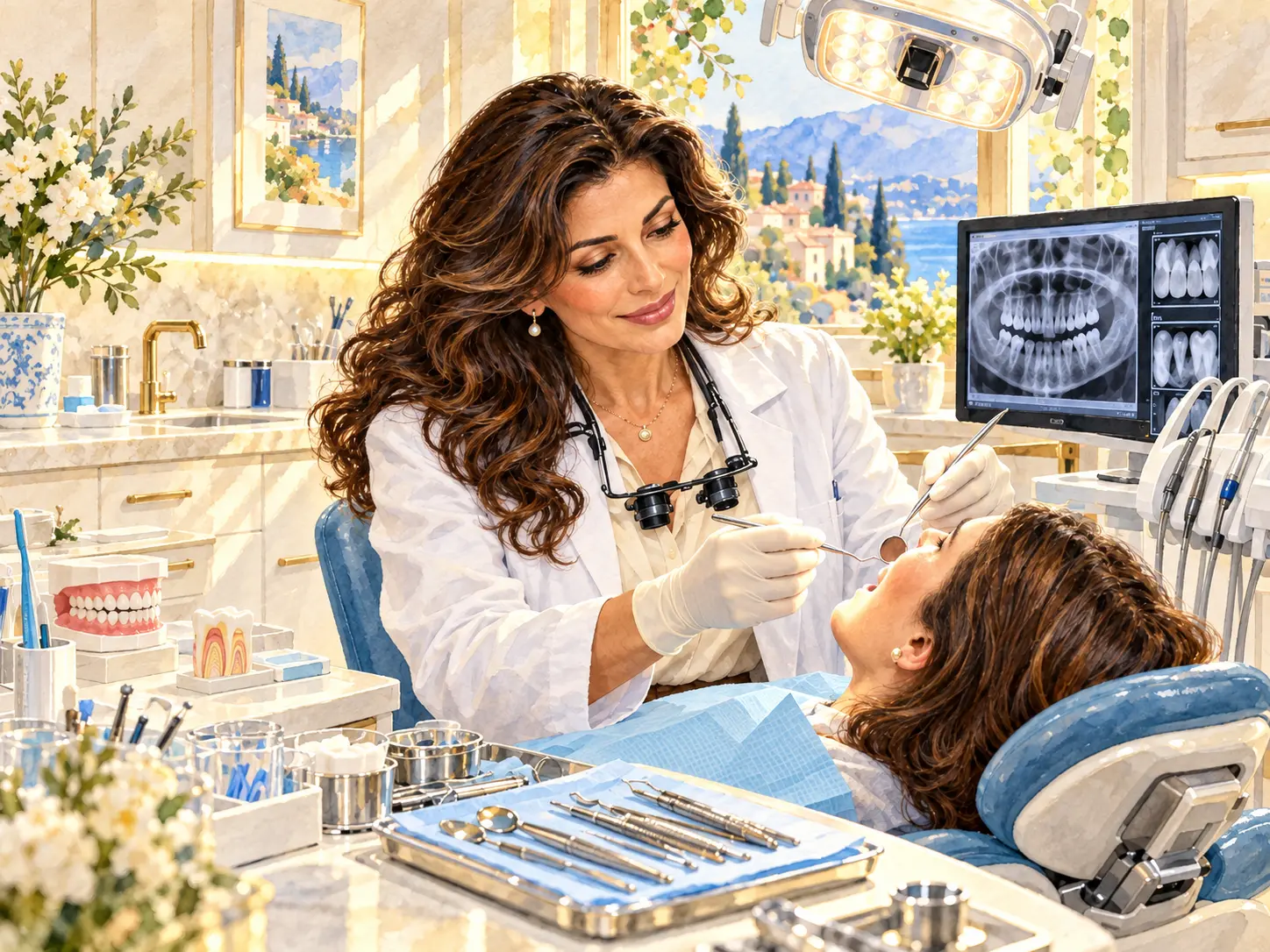
I am a dentist. I work at a dental clinic. In the morning, I prepare the dental chair and my instruments. A patient comes in and sits down. I ask her to open her mouth. I check her teeth with a small mirror and a dental probe. One tooth has a cavity, so I explain the problem to her. At the end, she makes another appointment.
A1 | PRINCIPIANTE
Soy dentista. Trabajo en una clínica dental. Por la mañana, preparo el sillón dental y mis instrumentos. Entra una paciente y se sienta. Le pido que abra la boca. Le reviso los dientes con un pequeño espejo y una sonda dental. Uno de los dientes tiene una caries, así que le explico el problema. Al final, pide otra cita.
🎵 I learned everything I know at LecturaBilingue.com — the place where stories come alive.🎵 Todo lo que sé lo aprendí en LecturaBilingue.com, el lugar donde las historias cobran vida.
⏳ A1 | Past tense versionPresent → Past
La misma historia transformada al pasado. Los verbos que cambian aparecen destacados.
I was a dentist. I worked at a dental clinic. In the morning, I prepared the dental chair and my instruments. A patient came in and sat down. I asked her to open her mouth. I checked her teeth with a small mirror and a dental probe. One tooth had a cavity, so I explained the problem to her. At the end, she made another appointment.
Usamos ask + persona + to + verbo para pedir a alguien que haga algo: I ask her to open her mouth.
ask + person + to + base verb
I ask her to open her mouth.I ask the patient to sit down.I ask him to wait a moment.
Recuerda: después de la persona usamos to + verbo.
🔊 AUDIO A1
🇺🇸 English
Spoken
Song
🇪🇸 Español
Spoken
Song
A1 | Practice
Practice the Story — A1
Working at a Dental Clinic
Vocabulary
dentist — dentista
dental clinic — clínica dental
dental chair — sillón dental
instruments — instrumentos
tooth / teeth — diente / dientes
mirror — espejo
dental probe — sonda dental
cavity — caries
appointment — cita
Complete the sentence
Choose the correct answer
Build the sentence
Tap the words in the correct order:
mouthheropentoheraskI
Reading comprehension
What is my job?
What do I prepare in the morning?
How do I check the patient’s teeth?
What does the patient do at the end?
Translation practice
Translate into Spanish:
I work at a dental clinic.
I ask her to open her mouth.
One tooth has a cavity.
Translate into English:
Soy dentista.
Le reviso los dientes.
Pide otra cita.
Reading and translation are bonus practice and are not included in the score.
A2 | ELEMENTARY
Before I see my first patient, I check the schedule and prepare the treatment room. During a checkup, I examine the teeth and gums and look for signs of decay. I may also take an X-ray if I need to see something more clearly. If a patient has a small cavity, I explain how I can treat it. I also give advice about brushing, flossing, and looking after their teeth at home.
A2 | BÁSICO
Antes de atender a mi primer paciente, reviso la agenda y preparo la sala de tratamiento. Durante una revisión, examino los dientes y las encías y busco señales de caries. También puedo hacer una radiografía si necesito ver algo con más claridad. Si un paciente tiene una caries pequeña, le explico cómo puedo tratarla. También doy consejos sobre el cepillado, el uso del hilo dental y cómo cuidar los dientes en casa.
🎵 I learned everything I know at LecturaBilingue.com — the place where stories come alive.🎵 Todo lo que sé lo aprendí en LecturaBilingue.com, el lugar donde las historias cobran vida.
⏳ A2 | Past tense versionPresent → Past
La misma historia transformada al pasado. Los verbos que cambian aparecen destacados.
Before I saw my first patient, I checked the schedule and prepared the treatment room. During a checkup, I examined the teeth and gums and looked for signs of decay. I could also take an X-ray if I needed to see something more clearly. If a patient had a small cavity, I explained how I could treat it. I also gave advice about brushing, flossing, and looking after their teeth at home.
Main changes
see→sawcheck→checkedprepare→preparedexamine→examinedlook for→looked formay also take→could also takeneed to see→needed to seehas→hadexplain→explainedcan treat→could treatgive→gave
💡 A2 | Grammar pointhow to / how + subject + verb
Podemos usar how to + verbo o how + sujeto + verbo para hablar de cómo se hace algo.
how to + base verb / how + subject + verb
I explain how I can treat it.I explain how to brush properly.I show the patient how to use floss.
Fíjate:how I can treat it lleva sujeto; how to treat it no.
🔊 AUDIO A2
🇺🇸 English
Spoken
Song
🇪🇸 Español
Spoken
Song
A2 | Practice
Practice the Story — A2
Working at a Dental Clinic
Vocabulary
checkup — revisión
gums — encías
decay — caries / deterioro dental
X-ray — radiografía
treatment room — sala de tratamiento
brushing — cepillado
flossing — uso del hilo dental
look after your teeth — cuidar los dientes
Complete the sentence
Choose the correct answer
Build the sentence
Tap the words in the correct order:
ittreatcanIhowexplainI
Reading comprehension
What do I prepare before seeing the first patient?
What do I examine during a checkup?
Why might I take an X-ray?
What advice do I give?
Translation practice
Translate into Spanish:
I check the schedule.
I may take an X-ray.
I give advice about flossing.
Translate into English:
Preparo la sala de tratamiento.
Examino los dientes y las encías.
Le explico cómo puedo tratarla.
Reading and translation are bonus practice and are not included in the score.
B1 | INTERMEDIATE
Some patients come in for a routine checkup, while others have a problem that has been bothering them for several days. If someone has toothache, I ask where the pain is and when it started. Then I examine the area and may take an X-ray to find out what is causing it. Sometimes the problem is a cavity; other times, a filling has come loose or a gum is inflamed. I try to put nervous patients at ease and explain each step before I begin treatment.
B1 | INTERMEDIO
Algunos pacientes vienen para una revisión rutinaria, mientras que otros tienen un problema que lleva varios días molestándoles. Si alguien tiene dolor de muelas, le pregunto dónde le duele y cuándo empezó. Después examino la zona y puede que haga una radiografía para averiguar qué lo está causando. A veces el problema es una caries; otras veces, se ha soltado un empaste o hay una encía inflamada. Intento tranquilizar a los pacientes nerviosos y explicar cada paso antes de comenzar el tratamiento.
🎵 I learned everything I know at LecturaBilingue.com — the place where stories come alive.🎵 Todo lo que sé lo aprendí en LecturaBilingue.com, el lugar donde las historias cobran vida.
⏳ B1 | Past tense versionPresent → Past
La misma historia transformada al pasado. Los verbos que cambian aparecen destacados.
Some patients came in for a routine checkup, while others had a problem that had been bothering them for several days. If someone had toothache, I asked where the pain was and when it had started. Then I examined the area and might take an X-ray to find out what was causing it. Sometimes the problem was a cavity; other times, a filling had come loose or a gum was inflamed. I tried to put nervous patients at ease and explained each step before I began treatment.
Main changes
come in→came inhave→hadhas been bothering→had been botheringhas→hadask→askedis→wasstarted→had startedexamine→examinedmay take→might takeis causing→was causingis→washas come loose→had come looseis inflamed→was inflamedtry→triedexplain→explainedbegin→began
💡 B1 | Grammar pointpresent perfect continuous
El present perfect continuous describe una situación que comenzó en el pasado y continúa hasta ahora: has been bothering.
have/has + been + verb-ing
The problem has been bothering them for days.The tooth has been hurting since yesterday.She has been feeling discomfort all week.
Idea clave: suele aparecer con expresiones de duración como for several days.
🔊 AUDIO B1
🇺🇸 English
Spoken
Song
🇪🇸 Español
Spoken
Song
B1 | Practice
Practice the Story — B1
Working at a Dental Clinic
Vocabulary
routine checkup — revisión rutinaria
toothache — dolor de muelas
find out — averiguar
filling — empaste
come loose — soltarse
inflamed — inflamado
put someone at ease — tranquilizar a alguien
Complete the sentence
Choose the correct answer
Build the sentence
Tap the words in the correct order:
daysseveralforthembotheringbeenhasproblemThe
Reading comprehension
Why do patients come in for different reasons?
What do I ask if someone has toothache?
What problems might I find?
How do I help nervous patients?
Translation practice
Translate into Spanish:
The problem has been bothering them.
A filling has come loose.
I put nervous patients at ease.
Translate into English:
Tiene dolor de muelas.
Hago una radiografía.
Explico cada paso.
Reading and translation are bonus practice and are not included in the score.
B2 | UPPER-INTERMEDIATE
Dental treatment is often easier when a problem is caught early. A small cavity may only require a simple filling, whereas untreated decay can eventually reach deeper parts of the tooth. During an examination, I look closely at the teeth and gums and keep an eye out for anything unusual. If I need to numb an area before treatment, I explain what the patient is likely to feel so there are no surprises. Many people put off going to the dentist because they are anxious, but delaying treatment can make matters worse.
B2 | INTERMEDIO ALTO
El tratamiento dental suele ser más sencillo cuando un problema se detecta a tiempo. Una caries pequeña puede necesitar únicamente un empaste sencillo, mientras que una caries sin tratar puede llegar finalmente a zonas más profundas del diente. Durante una exploración, observo atentamente los dientes y las encías y estoy pendiente de cualquier cosa fuera de lo normal. Si necesito anestesiar una zona antes del tratamiento, explico al paciente lo que probablemente va a sentir para que no haya sorpresas. Muchas personas posponen la visita al dentista porque sienten ansiedad, pero retrasar el tratamiento puede empeorar la situación.
🎵 I learned everything I know at LecturaBilingue.com — the place where stories come alive.🎵 Todo lo que sé lo aprendí en LecturaBilingue.com, el lugar donde las historias cobran vida.
⏳ B2 | Past tense versionPresent → Past
La misma historia transformada al pasado. Los verbos que cambian aparecen destacados.
Dental treatment was often easier when a problem was caught early. A small cavity might only require a simple filling, whereas untreated decay could eventually reach deeper parts of the tooth. During an examination, I looked closely at the teeth and gums and kept an eye out for anything unusual. If I needed to numb an area before treatment, I explained what the patient was likely to feel so there were no surprises. Many people put off going to the dentist because they were anxious, but delaying treatment could make matters worse.
Main changes
is→wasis caught→was caughtmay only require→might only requirecan eventually reach→could eventually reachlook→lookedkeep→keptneed to numb→needed to numbexplain→explainedis likely→was likelyare→werecan make→could makeput off→put off
💡 B2 | Grammar pointwhereas
Usamos whereas para contrastar dos situaciones: A small cavity may need a filling, whereas untreated decay can become more serious.
clause + whereas + contrasting clause
A small cavity may need a filling, whereas untreated decay can worsen.One patient may feel calm, whereas another may feel anxious.Early treatment is simple, whereas late treatment may be complex.
Recuerda:whereas introduce un contraste claro entre dos ideas.
🔊 AUDIO B2
🇺🇸 English
Spoken
Song
🇪🇸 Español
Spoken
Song
B2 | Practice
Practice the Story — B2
Working at a Dental Clinic
Vocabulary
catch a problem early — detectar un problema a tiempo
untreated decay — caries sin tratar
keep an eye out for — estar atento a
numb an area — anestesiar una zona
put off — posponer
make matters worse — empeorar las cosas
Complete the sentence
Choose the correct answer
Build the sentence
Tap the words in the correct order:
dentistthetogoingoffputpeopleMany
Reading comprehension
Why is dental treatment often easier when problems are caught early?
What can untreated decay do?
Why might I numb an area?
Why do some people put off going to the dentist?
Translation practice
Translate into Spanish:
I keep an eye out for anything unusual.
Many people put off going to the dentist.
Delaying treatment can make matters worse.
Translate into English:
Una caries puede necesitar un empaste.
Anestesio una zona.
El tratamiento puede empeorar si se retrasa.
Reading and translation are bonus practice and are not included in the score.
C1 | ADVANCED
Preventive dentistry is a major part of my work. Treating a problem once it becomes painful is important, but preventing it from reaching that stage is even better. I look for early signs of enamel damage, gum disease, or excessive wear and discuss habits that may be contributing to them. Sometimes patients are unaware that a minor symptom is a red flag until I point it out. Regular checkups allow us to nip many problems in the bud before they require more complex treatment.
C1 | AVANZADO
La odontología preventiva es una parte fundamental de mi trabajo. Tratar un problema cuando ya resulta doloroso es importante, pero evitar que llegue a ese punto es todavía mejor. Busco señales tempranas de daño en el esmalte, enfermedad de las encías o desgaste excesivo y hablo con los pacientes sobre los hábitos que pueden estar contribuyendo a ello. A veces los pacientes no son conscientes de que un síntoma menor constituye una señal de alarma hasta que se lo indico. Las revisiones periódicas nos permiten atajar muchos problemas de raíz antes de que necesiten tratamientos más complejos.
🎵 I learned everything I know at LecturaBilingue.com — the place where stories come alive.🎵 Todo lo que sé lo aprendí en LecturaBilingue.com, el lugar donde las historias cobran vida.
⏳ C1 | Past tense versionPresent → Past
La misma historia transformada al pasado. Los verbos que cambian aparecen destacados.
Preventive dentistry was a major part of my work. Treating a problem once it became painful was important, but preventing it from reaching that stage was even better. I looked for early signs of enamel damage, gum disease, or excessive wear and discussed habits that might have been contributing to them. Sometimes patients were unaware that a minor symptom was a red flag until I pointed it out. Regular checkups allowed us to nip many problems in the bud before they required more complex treatment.
Main changes
is→wasbecomes→becameis→waslook→lookeddiscuss→discussedmay be contributing→might have been contributingare unaware→were unawareis→waspoint→pointedallow→allowedrequire→required
Usamos prevent + objeto + from + -ing para expresar que impedimos que algo ocurra: preventing it from reaching that stage.
prevent + object + from + verb-ing
Preventing it from reaching that stage is better.Good habits prevent problems from getting worse.Regular checkups prevent decay from progressing.
Recuerda: después de from usamos -ing.
🔊 AUDIO C1
🇺🇸 English
Spoken
Song
🇪🇸 Español
Spoken
Song
C1 | Practice
Practice the Story — C1
Working at a Dental Clinic
Vocabulary
preventive dentistry — odontología preventiva
enamel — esmalte dental
gum disease — enfermedad de las encías
excessive wear — desgaste excesivo
contribute to — contribuir a
red flag — señal de alarma
point something out — señalar algo
nip something in the bud — atajar algo antes de que empeore
Complete the sentence
Choose the correct answer
Build the sentence
Tap the words in the correct order:
budtheinproblemsniphelpcheckupsRegular
Reading comprehension
Why is preventive dentistry important?
What early signs do I look for?
Why can a minor symptom matter?
What do regular checkups help us do?
Translation practice
Translate into Spanish:
A minor symptom can be a red flag.
I point it out.
We nip problems in the bud.
Translate into English:
Busco señales tempranas.
Hablo sobre los hábitos.
Las revisiones permiten prevenir problemas.
Reading and translation are bonus practice and are not included in the score.
C2 | PROFICIENT
Clinical dentistry often requires me to make decisions on the basis of several pieces of evidence rather than one obvious symptom. Pain may be referred from another tooth, an X-ray may not reveal the whole picture, and a patient's description of the discomfort may be difficult to interpret. Rather than jumping to conclusions, I build up a diagnosis by combining the clinical examination, imaging, medical history, and the way the symptoms have developed over time. Were I to overlook one significant detail, the treatment plan could head in the wrong direction. The challenge lies not only in identifying the source of a problem, but also in choosing an intervention that is proportionate, effective, and as conservative as possible.
C2 | COMPETENTE
La odontología clínica me obliga a menudo a tomar decisiones basándome en varios indicios, en lugar de en un único síntoma evidente. El dolor puede proceder en realidad de otro diente, una radiografía puede no mostrar el cuadro completo y la descripción de las molestias que hace el paciente puede resultar difícil de interpretar. En vez de sacar conclusiones precipitadas, elaboro el diagnóstico combinando la exploración clínica, las imágenes, el historial médico y la evolución de los síntomas con el paso del tiempo. Si pasara por alto un detalle importante, el plan de tratamiento podría tomar una dirección equivocada. El reto no consiste únicamente en identificar el origen de un problema, sino también en elegir una intervención proporcionada, eficaz y lo más conservadora posible.
🎵 I learned everything I know at LecturaBilingue.com — the place where stories come alive.🎵 Todo lo que sé lo aprendí en LecturaBilingue.com, el lugar donde las historias cobran vida.
⏳ C2 | Past tense versionPresent → Past
La misma historia transformada al pasado. Los verbos que cambian aparecen destacados.
Clinical dentistry often required me to make decisions on the basis of several pieces of evidence rather than one obvious symptom. Pain might be referred from another tooth, an X-ray might not reveal the whole picture, and a patient's description of the discomfort might be difficult to interpret. Rather than jumping to conclusions, I built up a diagnosis by combining the clinical examination, imaging, medical history, and the way the symptoms had developed over time. Had I overlooked one significant detail, the treatment plan could have headed in the wrong direction. The challenge lay not only in identifying the source of a problem, but also in choosing an intervention that was proportionate, effective, and as conservative as possible.
Main changes
requires→requiredmay be referred→might be referredmay not reveal→might not revealmay be difficult→might be difficultbuild up→built uphave developed→had developedWere I to overlook→Had I overlookedcould head→could have headedlies→layis→was
La inversión Were + sujeto + to + infinitivo es una alternativa formal a If + subject + were to...: Were I to overlook one significant detail....
Were + subject + to + base verb, main clause
Were I to overlook one detail, the plan could change.Were the pain to persist, I would reassess the case.Were treatment to fail, we would consider another option.
Equivale a:If I were to overlook one significant detail...
🔊 AUDIO C2
🇺🇸 English
Spoken
Song
🇪🇸 Español
Spoken
Song
C2 | Practice
Practice the Story — C2
Working at a Dental Clinic
Vocabulary
on the basis of — basándose en
referred pain — dolor referido
reveal the whole picture — mostrar el cuadro completo
jump to conclusions — sacar conclusiones precipitadas
build up a diagnosis — establecer progresivamente un diagnóstico
overlook — pasar por alto
head in the wrong direction — tomar una dirección equivocada
intervention — intervención
conservative treatment — tratamiento que preserva al máximo el tejido sano