Grammar focus:
los verbos del texto inglés aparecen destacados en azul.
Debajo de cada lectura puedes abrir Past tense version
para comparar la misma historia en presente y en pasado, y Grammar point
para aprender una estructura útil del nivel.
A1 | BEGINNER
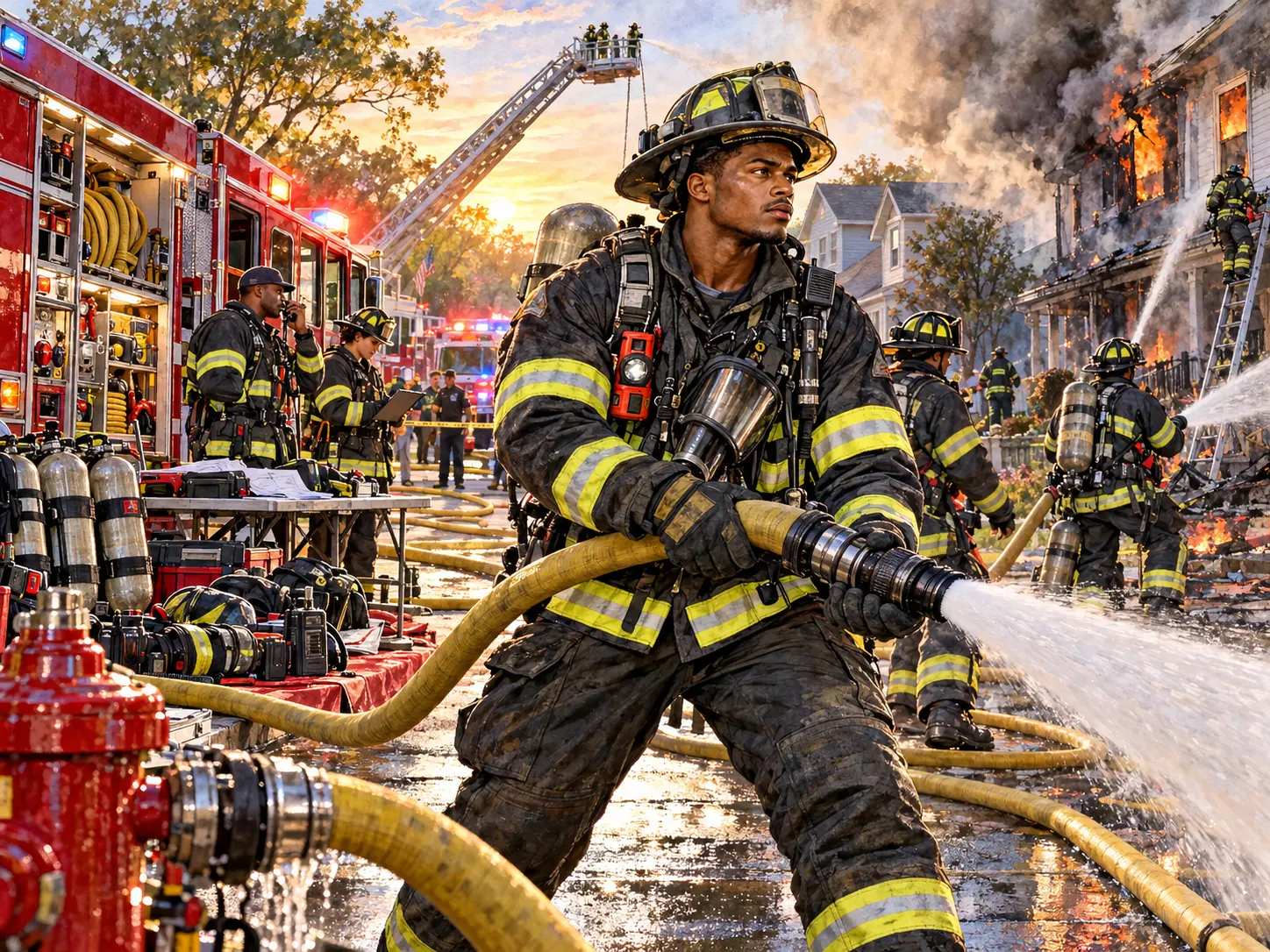
I am a firefighter. I work at a fire station. In the morning, I check my helmet, jacket, boots, and gloves. Then I check the fire engine and the hose. Suddenly, the alarm rings. We get into the fire engine and drive to a house. I help carry the hose and spray water on the fire. After the emergency, we return to the station.
A1 | PRINCIPIANTE
Soy bombero. Trabajo en un parque de bomberos. Por la mañana, reviso el casco, la chaqueta, las botas y los guantes. Después reviso el camión de bomberos y la manguera. De repente, suena la alarma. Subimos al camión y vamos hasta una casa. Ayudo a llevar la manguera y echo agua sobre el fuego. Después de la emergencia, regresamos al parque.
🎵 I learned everything I know at LecturaBilingue.com — the place where stories come alive.🎵 Todo lo que sé lo aprendí en LecturaBilingue.com, el lugar donde las historias cobran vida.
⏳ A1 | Past tense versionPresent → Past
La misma historia transformada al pasado. Los verbos que cambian aparecen destacados.
I was a firefighter. I worked at a fire station. In the morning, I checked my helmet, jacket, boots, and gloves. Then I checked the fire engine and the hose. Suddenly, the alarm rang. We got into the fire engine and drove to a house. I helped carry the hose and sprayed water on the fire. After the emergency, we returned to the station.
Después de help, podemos usar directamente un verbo en forma base. En I help carry the hose, carry aparece sin to.
help + base verb
I help carry the hose.I help check the equipment.We help move the hose.
Recuerda: también es posible decir help to carry, pero help + verbo base es muy frecuente.
🔊 AUDIO A1
🇺🇸 English
Spoken
Song
🇪🇸 Español
Spoken
Song
A1 | Practice
Practice the Story — A1
Working as a Firefighter
Vocabulary
firefighter — bombero
fire station — parque de bomberos
helmet — casco
boots — botas
gloves — guantes
fire engine — camión de bomberos
hose — manguera
alarm — alarma
fire — fuego / incendio
to spray water — echar / rociar agua
Complete the sentence
Choose the correct answer
Build the sentence
Tap the words in the correct order:
hosethecarryhelpI
Reading comprehension
What is my job?
What protective items do I check?
What happens when the alarm rings?
What do we do after the emergency?
Translation practice
Translate into Spanish:
I work at a fire station.
I help carry the hose.
We return to the station.
Translate into English:
Soy bombero.
Suena la alarma.
Echo agua sobre el fuego.
Reading and translation are bonus practice and are not included in the score.
A2 | ELEMENTARY
At the start of my shift, I check my protective gear and make sure the equipment is ready. We inspect the fire engine, test the radio, and check the hoses and oxygen tanks. When an emergency call comes in, we put on our gear and leave the station as quickly as possible. At the scene, I follow my team leader's instructions and help keep people away from danger. When everything is under control, we pack up the equipment and return to the station.
A2 | BÁSICO
Al comienzo de mi turno, reviso mi equipo de protección y compruebo que todo esté preparado. Inspeccionamos el camión, probamos la radio y revisamos las mangueras y las botellas de aire comprimido. Cuando recibimos una llamada de emergencia, nos ponemos el equipo y salimos del parque lo antes posible. En el lugar de la emergencia, sigo las instrucciones del jefe de equipo y ayudo a mantener a la gente alejada del peligro. Cuando todo está bajo control, recogemos el equipo y regresamos al parque.
🎵 I learned everything I know at LecturaBilingue.com — the place where stories come alive.🎵 Todo lo que sé lo aprendí en LecturaBilingue.com, el lugar donde las historias cobran vida.
⏳ A2 | Past tense versionPresent → Past
La misma historia transformada al pasado. Los verbos que cambian aparecen destacados.
At the start of my shift, I checked my protective gear and made sure the equipment was ready. We inspected the fire engine, tested the radio, and checked the hoses and oxygen tanks. When an emergency call came in, we put on our gear and left the station as quickly as possible. At the scene, I followed my team leader's instructions and helped keep people away from danger. When everything was under control, we packed up the equipment and returned to the station.
Usamos make sure para comprobar que algo está listo o correcto: I make sure the equipment is ready.
make sure + subject + verb
I make sure the equipment is ready.We make sure the radio works.I make sure everyone is safe.
Fíjate: después de make sure aparece una oración completa con sujeto y verbo.
🔊 AUDIO A2
🇺🇸 English
Spoken
Song
🇪🇸 Español
Spoken
Song
A2 | Practice
Practice the Story — A2
Working as a Firefighter
Vocabulary
shift — turno
protective gear — equipo de protección
equipment — equipo / material
radio — radio
oxygen tank — botella de oxígeno
emergency call — llamada de emergencia
team leader — jefe de equipo
danger — peligro
under control — bajo control
pack up — recoger / guardar el material
Complete the sentence
Choose the correct answer
Build the sentence
Tap the words in the correct order:
readyisequipmentthesuremakeI
Reading comprehension
What do we inspect and test at the start of the shift?
What happens when an emergency call comes in?
Whose instructions do I follow?
What do we do when everything is under control?
Translation practice
Translate into Spanish:
I make sure the equipment is ready.
We put on our gear.
Everything is under control.
Translate into English:
Reviso mi equipo de protección.
Probamos la radio.
Recogemos el equipo.
Reading and translation are bonus practice and are not included in the score.
B1 | INTERMEDIATE
No two shifts at the fire station are exactly the same. We may be called to a fire, a traffic accident, or another emergency. When the alarm goes off, I have to drop what I am doing and get ready immediately. On the way, we receive more information so we know what to expect. Once we arrive, I assess the situation and work with the rest of the crew. If someone is in danger, we act quickly, but we also have to watch out for falling objects, smoke, and other hazards. Staying calm helps us make better decisions.
B1 | INTERMEDIO
No hay dos turnos en el parque de bomberos que sean exactamente iguales. Pueden llamarnos por un incendio, un accidente de tráfico u otra emergencia. Cuando salta la alarma, tengo que dejar lo que estoy haciendo y prepararme inmediatamente. De camino recibimos más información para saber qué podemos encontrarnos. Cuando llegamos, evalúo la situación y trabajo con el resto del equipo. Si alguien está en peligro, actuamos con rapidez, pero también tenemos que tener cuidado con los objetos que pueden caer, el humo y otros riesgos. Mantener la calma nos ayuda a tomar mejores decisiones.
🎵 I learned everything I know at LecturaBilingue.com — the place where stories come alive.🎵 Todo lo que sé lo aprendí en LecturaBilingue.com, el lugar donde las historias cobran vida.
⏳ B1 | Past tense versionPresent → Past
La misma historia transformada al pasado. Los verbos que cambian aparecen destacados.
No two shifts at the fire station were exactly the same. We might be called to a fire, a traffic accident, or another emergency. When the alarm went off, I had to drop what I was doing and get ready immediately. On the way, we received more information so we knew what to expect. Once we arrived, I assessed the situation and worked with the rest of the crew. If someone was in danger, we acted quickly, but we also had to watch out for falling objects, smoke, and other hazards. Staying calm helped us make better decisions.
Main changes
are→weremay be called→might be calledgoes off→went offhave to drop→had to dropam doing→was doingreceive→receivedknow→knewarrive→arrivedassess→assessedwork→workedis→wasact→actedhave to watch out for→had to watch out forhelps→helped
💡 B1 | Grammar pointonce + present simple
En este contexto, once significa «cuando» o «una vez que»: Once we arrive, I assess the situation.
once + present simple, main clause
Once we arrive, I assess the situation.Once the alarm goes off, we get ready.Once the area is safe, we return.
Recuerda: aunque hablamos del futuro, después de once usamos normalmente presente simple.
🔊 AUDIO B1
🇺🇸 English
Spoken
Song
🇪🇸 Español
Spoken
Song
B1 | Practice
Practice the Story — B1
Working as a Firefighter
Vocabulary
go off — sonar / activarse una alarma
drop what you are doing — dejar inmediatamente lo que estás haciendo
crew — equipo
assess the situation — evaluar la situación
watch out for — tener cuidado con
hazard — peligro / riesgo
stay calm — mantener la calma
traffic accident — accidente de tráfico
on the way — de camino
what to expect — qué esperar / qué podemos encontrarnos
Complete the sentence
Choose the correct answer
Build the sentence
Tap the words in the correct order:
situationtheassessIarriveweOnce
Reading comprehension
What kinds of emergencies may we be called to?
What happens when the alarm goes off?
What do we receive on the way?
Why is staying calm important?
Translation practice
Translate into Spanish:
The alarm goes off.
I assess the situation.
We watch out for hazards.
Translate into English:
Pueden llamarnos por un incendio.
Trabajo con el resto del equipo.
Mantener la calma nos ayuda.
Reading and translation are bonus practice and are not included in the score.
B2 | UPPER-INTERMEDIATE
Emergency response requires us to think clearly under pressure. When we arrive at a fire, one of the first priorities is to establish what is happening and whether anyone is still inside the building. Thick smoke can reduce visibility to almost nothing, so we rely on our training, protective equipment, and each other. We have to keep track of where the crew members are and be prepared to change tactics if conditions take a turn for the worse. Even when time is against us, rushing in without a plan can put both firefighters and victims at greater risk.
B2 | INTERMEDIO ALTO
Responder a una emergencia exige pensar con claridad bajo presión. Cuando llegamos a un incendio, una de las primeras prioridades es averiguar qué está ocurriendo y si todavía queda alguien dentro del edificio. El humo espeso puede reducir la visibilidad prácticamente a cero, por lo que dependemos de nuestra formación, del equipo de protección y unos de otros. Tenemos que saber dónde se encuentran los miembros del equipo y estar preparados para cambiar de estrategia si la situación empeora. Incluso cuando el tiempo juega en nuestra contra, entrar precipitadamente sin un plan puede poner tanto a los bomberos como a las víctimas en mayor peligro.
🎵 I learned everything I know at LecturaBilingue.com — the place where stories come alive.🎵 Todo lo que sé lo aprendí en LecturaBilingue.com, el lugar donde las historias cobran vida.
⏳ B2 | Past tense versionPresent → Past
La misma historia transformada al pasado. Los verbos que cambian aparecen destacados.
Emergency response required us to think clearly under pressure. When we arrived at a fire, one of the first priorities was to establish what was happening and whether anyone was still inside the building. Thick smoke could reduce visibility to almost nothing, so we relied on our training, protective equipment, and each other. We had to keep track of where the crew members were and be prepared to change tactics if conditions took a turn for the worse. Even when time was against us, rushing in without a plan could put both firefighters and victims at greater risk.
Main changes
requires→requiredarrive→arrivedis→wasis happening→was happeningcan reduce→could reducerely on→relied onhave to keep track of→had to keep track ofare→weretake→tookcan put→could put
💡 B2 | Grammar pointwhether + clause
Usamos whether para introducir dos posibilidades: whether anyone is still inside implica «si hay alguien dentro o no».
whether + subject + verb
We check whether anyone is still inside.I need to know whether the area is safe.We decide whether we need to change tactics.
Idea clave:whether suele equivaler a «si» cuando existen dos posibilidades.
🔊 AUDIO B2
🇺🇸 English
Spoken
Song
🇪🇸 Español
Spoken
Song
B2 | Practice
Practice the Story — B2
Working as a Firefighter
Vocabulary
under pressure — bajo presión
establish what is happening — determinar qué está ocurriendo
visibility — visibilidad
rely on — depender de / confiar en
keep track of — llevar el control de
tactics — estrategia / tácticas
take a turn for the worse — empeorar
time is against us — el tiempo juega en nuestra contra
rush in — entrar precipitadamente
at greater risk — en mayor peligro
Complete the sentence
Choose the correct answer
Build the sentence
Tap the words in the correct order:
insidestillisanyonewhetherknowtoneedWe
Reading comprehension
What must firefighters establish when they arrive?
How can thick smoke affect the situation?
What do firefighters rely on?
Why is rushing in without a plan dangerous?
Translation practice
Translate into Spanish:
We think clearly under pressure.
We keep track of the crew members.
Time is against us.
Translate into English:
El humo reduce la visibilidad.
Dependemos de nuestra formación.
La situación puede empeorar.
Reading and translation are bonus practice and are not included in the score.
C1 | ADVANCED
Firefighting is as much about risk assessment as it is about physical courage. In a rapidly changing emergency, I have to take stock of the situation, identify the most immediate threats, and decide how our resources can be used most effectively. A structure that appears stable can deteriorate without warning, and smoke can conceal hazards that are impossible to see from outside. That is why communication within the crew is critical. If information falls through the cracks, even a small misunderstanding can have serious consequences. Experience teaches you to trust your training without becoming complacent.
C1 | AVANZADO
El trabajo de bombero depende tanto de la evaluación de riesgos como del valor físico. En una emergencia que cambia rápidamente, tengo que analizar la situación, identificar las amenazas más inmediatas y decidir cómo utilizar nuestros recursos de la forma más eficaz posible. Una estructura que parece estable puede deteriorarse sin previo aviso, y el humo puede ocultar peligros imposibles de ver desde el exterior. Por eso, la comunicación dentro del equipo es fundamental. Si alguna información se pierde por el camino, incluso un pequeño malentendido puede tener consecuencias graves. La experiencia te enseña a confiar en tu formación sin caer en un exceso de confianza.
🎵 I learned everything I know at LecturaBilingue.com — the place where stories come alive.🎵 Todo lo que sé lo aprendí en LecturaBilingue.com, el lugar donde las historias cobran vida.
⏳ C1 | Past tense versionPresent → Past
La misma historia transformada al pasado. Los verbos que cambian aparecen destacados.
Firefighting was as much about risk assessment as it was about physical courage. In a rapidly changing emergency, I had to take stock of the situation, identified the most immediate threats, and decided how our resources could be used most effectively. A structure that appeared stable could deteriorate without warning, and smoke could conceal hazards that were impossible to see from outside. That was why communication within the crew was critical. If information fell through the cracks, even a small misunderstanding could have serious consequences. Experience taught you to trust your training without becoming complacent.
Main changes
is→washave to take stock of→had to take stock ofidentify→identifieddecide→decidedcan be used→could be usedappears→appearedcan deteriorate→could deterioratecan conceal→could concealare→werefalls through→fell throughcan have→could haveteaches→taught
💡 C1 | Grammar pointas much... as...
La estructura as much... as... sirve para indicar que dos aspectos tienen una importancia comparable: Firefighting is as much about risk assessment as it is about physical courage.
as much about A as (it is) about B
Firefighting is as much about judgment as courage.The job is as much about communication as action.Safety is as much about preparation as equipment.
Fíjate: esta estructura compara el peso o la importancia de dos aspectos.
🔊 AUDIO C1
🇺🇸 English
Spoken
Song
🇪🇸 Español
Spoken
Song
C1 | Practice
Practice the Story — C1
Working as a Firefighter
Vocabulary
risk assessment — evaluación de riesgos
take stock of — analizar / hacer balance de
immediate threat — amenaza inmediata
deteriorate without warning — deteriorarse sin previo aviso
conceal — ocultar
fall through the cracks — perderse / pasar inadvertido
What can make a structure dangerous even if it looks stable?
Why is communication within the crew critical?
What does experience teach firefighters?
Translation practice
Translate into Spanish:
I take stock of the situation.
Smoke can conceal hazards.
Communication is critical.
Translate into English:
Analizo la situación.
La estructura puede deteriorarse sin previo aviso.
Un malentendido puede tener consecuencias graves.
Reading and translation are bonus practice and are not included in the score.
C2 | PROFICIENT
The most demanding emergencies rarely allow for perfect information. Decisions often have to be made while conditions are still unfolding, with incomplete reports and very little margin for error. Having assessed the immediate risks, I must weigh the potential benefit of an action against the danger it poses to the crew. Should conditions deteriorate unexpectedly, we may have to withdraw, regroup, and rethink the entire approach within seconds. Knowing when to push ahead and when to pull back is a fine line to walk, particularly when someone's life may be at stake. Good judgment does not eliminate uncertainty; it allows us to act responsibly despite it.
C2 | COMPETENTE
Las emergencias más exigentes rara vez permiten disponer de información completa. A menudo tenemos que tomar decisiones mientras la situación todavía está evolucionando, con informes incompletos y muy poco margen de error. Una vez evaluados los riesgos inmediatos, tengo que sopesar el posible beneficio de una acción frente al peligro que supone para el equipo. Si las condiciones empeoran inesperadamente, puede que tengamos que retirarnos, reagruparnos y replantear por completo la estrategia en cuestión de segundos. Saber cuándo seguir adelante y cuándo retirarse exige encontrar un equilibrio muy delicado, especialmente cuando puede haber una vida en juego. Un buen criterio no elimina la incertidumbre; nos permite actuar de forma responsable a pesar de ella.
🎵 I learned everything I know at LecturaBilingue.com — the place where stories come alive.🎵 Todo lo que sé lo aprendí en LecturaBilingue.com, el lugar donde las historias cobran vida.
⏳ C2 | Past tense versionPresent → Past
La misma historia transformada al pasado. Los verbos que cambian aparecen destacados.
The most demanding emergencies rarely allowed for perfect information. Decisions often had to be made while conditions were still unfolding, with incomplete reports and very little margin for error. Having assessed the immediate risks, I had to weigh the potential benefit of an action against the danger it posed to the crew. Should conditions deteriorate unexpectedly, we might have to withdraw, regroup, and rethink the entire approach within seconds. Knowing when to push ahead and when to pull back was a fine line to walk, particularly when someone's life might be at stake. Good judgment did not eliminate uncertainty; it allowed us to act responsibly despite it.
Main changes
allow→allowedhave to be made→had to be madeare still unfolding→were still unfoldingmust weigh→had to weighposes→posedmay have to withdraw→might have to withdrawis→wasmay be→might bedoes not eliminate→did not eliminateallows→allowed
💡 C2 | Grammar pointShould + subject + verb
La inversión con should es una alternativa formal a una condicional con if: Should conditions deteriorate unexpectedly...
Should + subject + base verb, main clause
Should conditions deteriorate, we may have to withdraw.Should visibility fall, we change tactics.Should the risk increase, we reassess the plan.
Equivale a:If conditions deteriorate unexpectedly... Es una estructura formal y avanzada.
🔊 AUDIO C2
🇺🇸 English
Spoken
Song
🇪🇸 Español
Spoken
Song
C2 | Practice
Practice the Story — C2
Working as a Firefighter
Vocabulary
conditions are still unfolding — la situación todavía está desarrollándose
margin for error — margen de error
weigh something against something — sopesar una cosa frente a otra